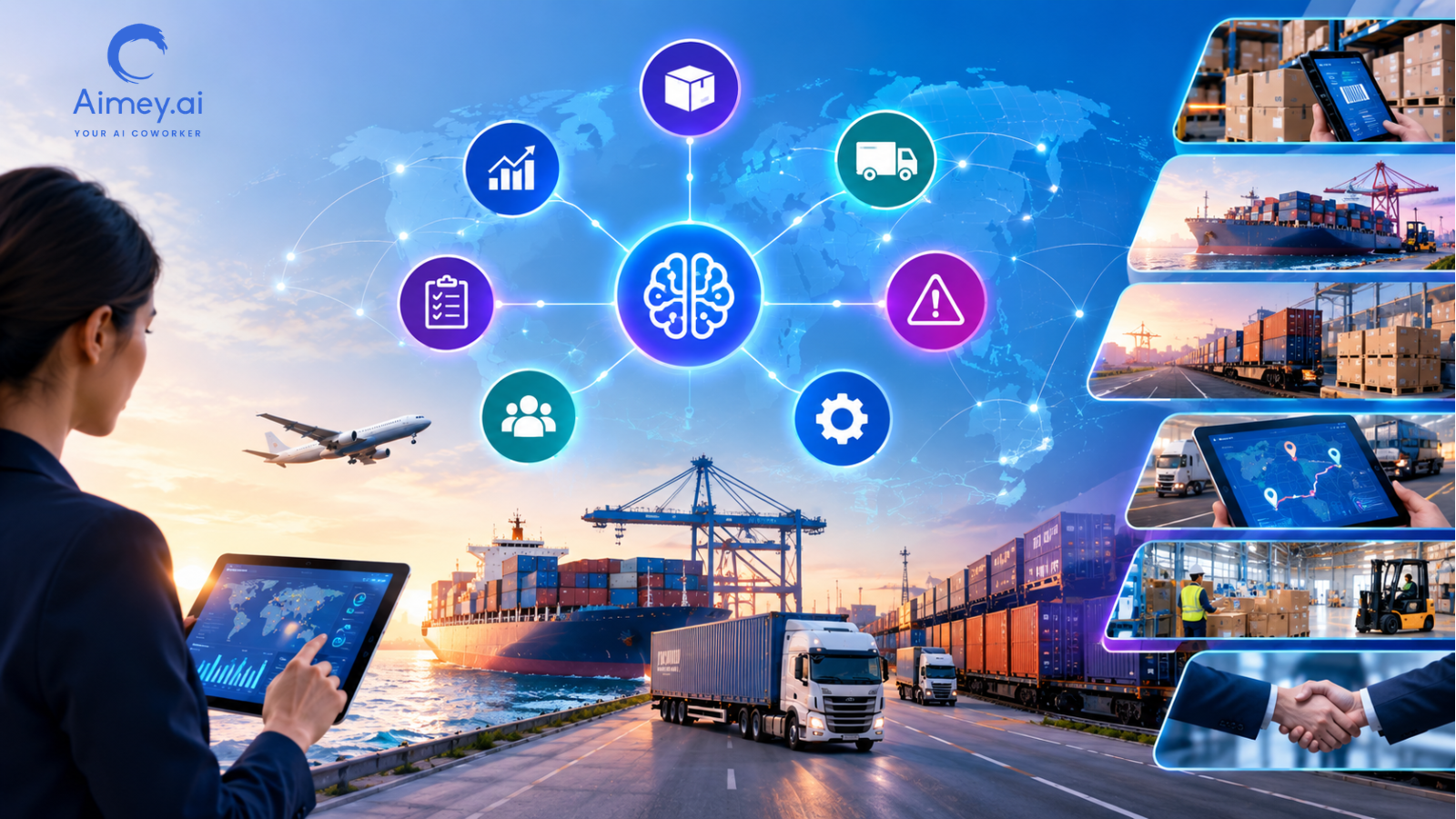
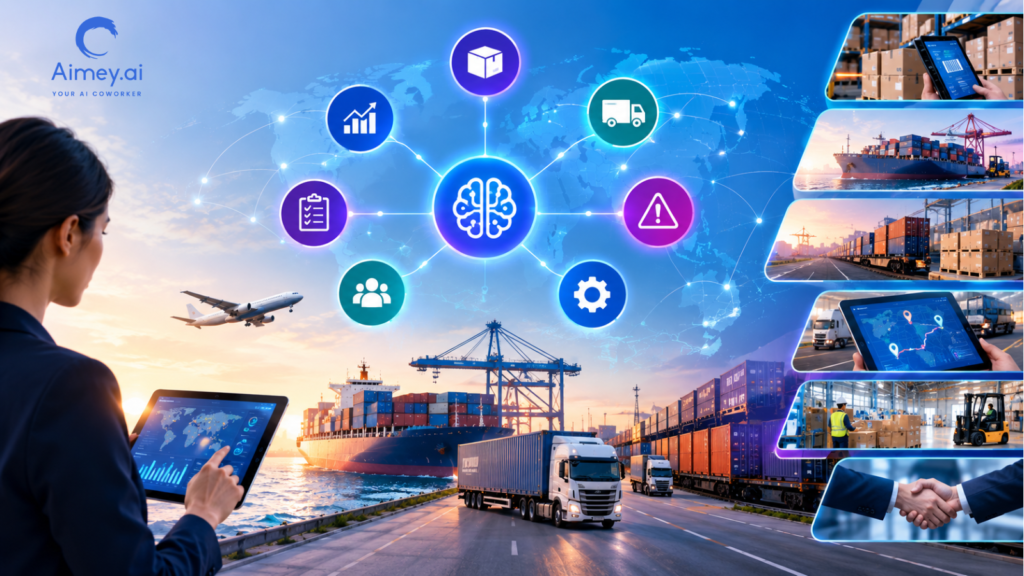
Supply chains make thousands of decisions every day. A demand increase, supplier delay, stockout risk or late shipment can cause a chain of manual checks and follow-ups.
Gartner expects that by 2030, 50% of cross-functional supply chain management solutions will use intelligent agents to make decisions on their own.
Agentic AI is able to track supply chain data, evaluate exceptions, determine what to do next, and carry out approved processes across connected systems.
This article discusses eight use cases for agentic AI in the supply chain and where the technology can generate measurable operational value.
What Is Agentic AI in Supply Chain Management?
Agentic AI is software agents which watch data, think and decide, act and escalate exceptions within stated rules.
In supply chain management, agents can interface with ERP, WMS, TMS, procurement, and planning systems. They can detect issues like demand increases, stock-outs, supplier delays, or shipment exceptions and activate the correct procedure.
For example, an inventory agent can detect a projected stockout, review demand and supplier lead times and suggest or execute a replacement per rules.
8 High-Impact Agentic AI Use Cases in Supply Chain
Agentic AI makes sense in parts of the supply chain where teams need to deal with massive volumes of data, react to exceptions, and make rule-based choices. What does that mean across eight important functions:
1. Demand Sensing and Demand Forecasting
The forecast is rarely right for all SKUs and all regions. Promotion could abruptly raise orders in one market. One competitor might steal demand from another. The mix can also change with a new sales channel.
How does the AI Agent operates:
The agent looks at order history, current sales, promotions, inventory levels, and outside demand signals. It compares these to the previous forecast to identify noteworthy changes. When the data shows a change, it can update the projection, identify SKUs to pay attention to, and push approved adjustments into the planning process.
Human intervention:
Planners step in and assess large adjustments when the facts aren’t confident enough.
2. Inventory Replenishment
Reordering stock is not as easy as just glancing at what you have at hand. Also examine the demand velocity, safety stock levels, supplier lead times, open POs, inbound shipments and inventory in other locations.
How the AI agent operates:
The agent monitors the stock levels and the demand that is expected. When it detects that stock might be running low, it looks at what has been ordered, what is on the way, and what providers are actually able to supply. And then it figures out what has to be replaced. It might recommend creating a new purchase order, moving stock from another warehouse, or marking the problem if demand can’t be met with supply on hand.
Human intervention:
Buyers get involved when an order exceeds a certain limit or violates standard buying practices.
3. Supplier Monitoring
Supplier performance might go down the toilet before it is noticed on a monthly scorecard. Some late acknowledgements, missed milestones, quality difficulties, capacity issues or sudden changes in lead time can be early warning indications that a supplier is in trouble.
How the AI agent operates:
The agent follows supplier confirmations, POs, delivery dates, quality records, lead times, and supplier messages. It looks for recurring problems, sees the pattern and what that could mean for production or inventories. It can also follow up on routine concerns and request suppliers to provide a new delivery commitment.
Human intervention:
If the problem needs negotiation, a revision to the contract or escalation with a strategic supplier, then the procurement teams take over.
4. Procurement Automation
Procurement teams are always dealing with a constant stream of RFQs, PO follow-ups, supplier questions, approvals, and invoicing difficulties. Many of these mundane operations in the source-to-pay process can be handled by an AI agent.
How the AI agent operates:
The agent evaluates each purchase request against approved suppliers, budgets, price standards, and contract requirements. It flags if anything is missing. It can submit RFQs, collect and compare supplier quotations, deliver requests to the correct approver, and maintain procurement records up to date. It also alerts when a price seems odd, or a purchase defies the rules.
Human intervention:
Strategic sourcing, non-standard buys and policy exclusions – buyers still make the calls.
5. Shipment and Logistics Exception Management
There are several reasons why shipments can be delayed. The carrier could be late, customs could detain it, a handoff could be missed, or a route could go out of service unexpectedly. And once that happens, someone normally has to chase up information, call the carrier, check the delivery commitment and figure out what to do next.
How the AI agent operates:
The agent monitors TMS changes, carrier feeds, GPS data, delivery milestones, and client promises. When something goes wrong, it tracks how the delay affects the cargo and its SLA. It can identify orders that are in danger, call the carrier, keep the proper people posted, offer an alternate route, and engage a member of the logistics team when a decision requires a human touch.
Human intervention:
The team will intervene when the call has higher cost or customer impact, e.g. changing carriers, approving an expensive reroute or giving a new delivery date.
6. Supply Chain Risk Monitoring
Supplier instability, geopolitical events, weather, port congestion, regulatory change, or abrupt capacity restrictions can all lead to supply chain risk. Teams require early signals related to their real supply network.
How the AI agent operates:
The agentic AI Coworker checks supplier data, shipping status, inventory exposure, external risk feeds, and network dependencies. It associates an outside incident with affected suppliers, lanes, SKUs or facilities and quantifies the possible operational effect. It can then highlight exposed orders, suggest mitigation actions, and reroute high-risk situations to the correct owner.
Human intervention:
Major sourcing, inventory, or network modifications are determined by supply chain leaders.
7. Order Management and Customer Exceptions
It can be easy for exceptions to order to become a cross-team problem. For example, a delayed PO can affect inventories, fulfillment, delivery schedules and what you’ve promised the customer. The AI agent can piece those together and assist teams in dealing with the issue from one spot.
How the AI agent operates:
The agent observes orders, ATP data, inventory, fulfillment, and promised delivery dates. If something goes wrong, it checks whose orders are affected and what can be done. From there, it can alter the order, inform customer care, change fulfillment, or submit the case to someone who needs to authorize it.
Human intervention:
But even if it is a crucial customer or a business concession or an exemption to the company policy, teams nevertheless take over.
8. Supply Chain Planning and Coordination
Planning teams rely on data from demand, inventories, procurement, production, and logistics. Any one change to a constraint can rapidly become a constraint somewhere else.
How the AI agent operates:
The agent looks at the planning inputs, the supply constraints, the inventory levels, the production capacity, and the outstanding commitments. It is able to discover conflicts, simulate the impact of possible actions, and offer adjustments to the production schedule, the distribution of inventories, or purchasing plans. It also tells the proper planner when limits require commercial discretion.
Human intervention:
Planners approve major decisions about allocation, production, and networks.
How Agentic AI Improves Supply Chain Operations
Agentic AI is able to enable supply chain teams to do something about issues rather than hear about them. An agent can notice a problem, grab the necessary information, and begin the next step without waiting for someone to manually review it.
- Faster problem resolution: Agents can identify delays, shortages or other problems and initiate the relevant procedure as soon as they notice them.
- Less repetitive work: Teams can assign routine checks, follow-ups, status updates, and escalations to agents.
- Restricted inventory management: Agents can view demand, supply and stock levels before undertaking a replenishment activity.
- Better supplier follow-up: Agents may follow up on how suppliers are doing and spot problems with deliveries or order fulfillment early on.
- Planning at speed: Rather than manually drawing data from many systems, planners can have agents gather inputs, assess constraints, and stage the next action.
- A clearer view of execution: Agents can see what’s occurring across orders, shipments, suppliers and internal teams, so users don’t have to put the tale together themselves.
The major upside is simple: agents can handle the mundane stuff that drags teams down. Then people can jump in if there’s a problem that demands experience, context, or a meaningful judgment.
Conclusion
Agentic AI can help supply chain teams automate choices related to demand, inventory, procurement, logistics and risk.
With AI Workflow Automation, Aimey links AI agents to business systems and processes to help teams move from identifying an issue to taking action.
Start with one quantifiable workflow, put explicit guardrails in place, and grow when the outcomes are obvious.
FAQs
What is AI for supply chain management?
Agentic AI uses AI agents to monitor activity across the supply chain and intervene when something needs attention. Based on rules you define, an agent can see a change in demand, flag a supplier issue, submit a replenishment order or react to a logistics difficulty. It can be used in planning, procurement, inventory, and logistics.
How can agentic AI improve supply chain operations?
One of the key benefits is that teams don’t have to query all systems or follow up on every exception. Agents can identify issues, determine the best course of action, and take authorized action. This allows teams to respond more quickly to changing demand, declining inventory, or a late supply.
What part do AI agents play in supply chain management?
An AI agent can monitor ERP, WMS, TMS, procurement, and planning tools for specific events. For instance, if a package is late. The agent can detect the delay, understand the impact, proceed within the allowed workflow, and take the next action. If it is a human decision, it can elevate the issue to the appropriate person.
What are the use cases of agentic AI in the supply chain?
Demand sensing, inventory replenishment, supplier monitoring, procurement, shipment exceptions, risk monitoring, order management, supply chain planning. Companies can use AI agents for: The best use cases are typically the areas where teams are dealing with very large amounts of information, repetitive decisions, and frequent exceptions.
You may like to read – Agentic AI in Logistics: How AI Agents Are Transforming the Industry