
Logistics providers already employ AI for forecasting, route planning, demand analysis, and warehouse management. The next phase is agentic AI in logistics, where AI is able to assess an operational problem, decide what has to be done, and act across connected systems.
The impact on the cost can be large. McKinsey estimates that some logistics companies adopting autonomous routing and scheduling have experienced more than a 20% decrease in inventory and logistics expenses.
The chance is not only route optimization. An AI agent can track a cargo, examine carrier status, check an SLA, update the TMS (Task Management System), generate a customer response, and escalate the issue when it crosses an approved threshold.
The real-world challenge for logistics leaders is: what operational routines can an AI agent take from discovery to resolution?
What Is Agentic AI in Logistics?
Agentic AI is an AI that can understand context, figure out what needs to happen next and execute multi-step activities with little to no human participation.
In logistics it’s more than just flagging a late shipment. An AI agent can monitor the cargo status, look at the delivery window, examine the choices available, update the system accordingly, contact the customer and escalate the issue if it falls outside of set business requirements.
The key difference is what each kind of technology is capable of.
- Predictive AI: Predicts demand, ETAs, capacity, etc.
- Generative AI: Summarizes, emails, reports, and more.
- Traditional automation: Rules-based, such as “If shipment status changes, send alert.”
- Agentic AI: It looks at the context, business rules and data available and then orchestrates a series of activities based on this.
For example: Truck is 4 hours late. A typical system would only say the revised ETA. The agent can check client delivery window, view downstream appointments, check available capacity, update TMS, alert account team, and write a new delivery message.
How Is Agentic AI Changing Logistics?
Agentic AI is changing logistics in the space between planned and real-world exceptions. Instead of raising an alarm and waiting for an operator, an AI agent may evaluate the problem, assess connected systems, and take the following steps within established rules.
Exception Alerts to Exception Handling
Late delivery could prompt a variety of manual checks. An AI agent can look into the reason, delivery window, carrier status and available solutions and then route the issue or take an approved action.
Example: Late shipment to ETA. Agent checks client SLA, updates TMS, notifies account team and creates new delivery update.
From Fixed Plans to Decisions in Real Time
Dispatch plans may change with traffic, demand, vehicle availability, weather, or warehouse constraints. Instead of following the initial schedule, agentic artificial intelligence may use these signals to re-evaluate the strategy.
Example: A vehicle is not accessible before dispatch. The agent checks for nearby capacity, delivery windows and route constraints and suggests an alternative or escalates the decision where clearance is needed.
From Manual to Connected Execution
A single shipment can comprise TMS, WMS, ERP, carrier portal, CRM, email, and collaboration tools. AI agents can move information between various systems and initiate the subsequent step without re-inputting data.
Example: Load rejected by a carrier. The agent records the rejection, verifies the approved carriers, notifies the transport team, updates the shipment workflow, and generates the needed message.
What Logistics Tasks Can AI Agents Automate?
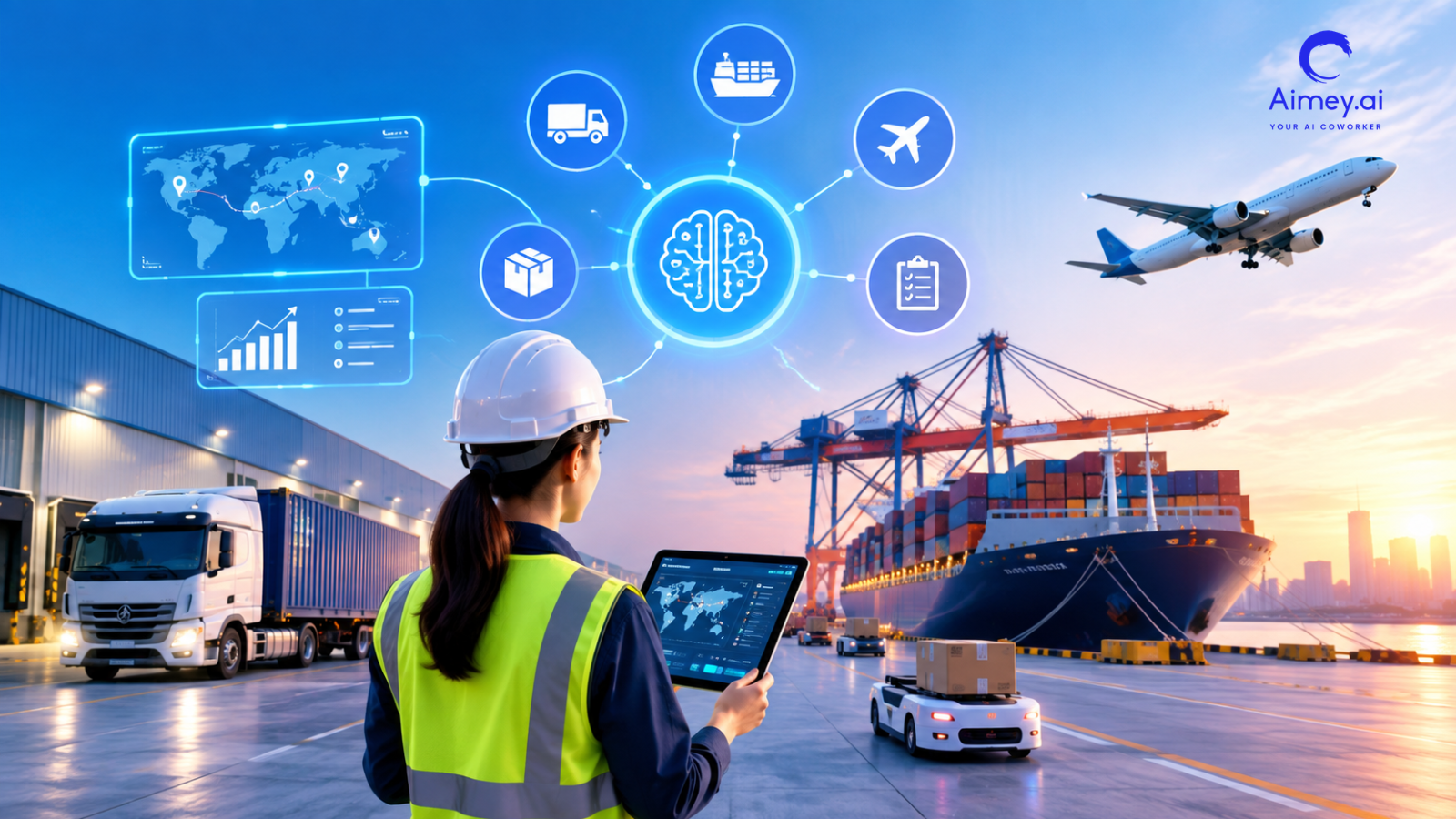
AI agents are most useful in logistics when there’s a lot to keep track of, choices need to be made often, and several teams need to stay aligned. These can be particularly handy when one activity leads to another, and the agent is able to maintain the whole thing.
1. Monitoring Shipments and Exceptions
Agents can watch shipments, detect delays, assess SLA issues, and communicate exceptions to the right team. If the next stage has already been approved, they can also begin the rehabilitation process.
2. Routing and Dispatch
Agents can see what cars are available, delivery windows and routing constraints, and also consider last-minute changes. They can suggest changes to the dispatch plan or make the changes themselves, if they have the proper permissions.
3. Carrier Management
Agents can monitor tender replies, carrier commitments, available capacity, and missed pickups. If a carrier turns down a cargo, they may explore acceptable options and note any variations from the agreed pricing or service aspects.
4. Order & delivery coordination
Usually an order will need numerous teams, from the warehouse to the transit to the customer care. Agents keep everyone in the loop with updates, highlight fulfillment concerns, coordinate adjustments, and ensure customer-facing teams have visibility into what’s going on.
5. Inventory Control & Replenishment
Agents have visibility of inventory, demand, supplier lead times and other constraints. When stock is getting low, they can flag it and start the replenishing process before it becomes a delivery issue.
6. Documentation & Compliance
Logistics teams are full of documentation. Agents can pull information from bills of lading, invoices, proof of delivery and customs paperwork. They can discover missing information and forward it to the right person to examine.
7. Customer Communications
Agents can bring together shipment and account information to create ETA updates, delay notifications, delivery confirmations, and responses to customer escalations. The team can evaluate and submit the message rather than creating it from the scratch.
8. Follow-ups on Operations and Meetings
Important choices often get lost in carrier evaluations, warehouse meetings, customer calls, and operations discussions. An AI meeting assistant can make those decisions, transform them into tasks, assign owners, and manage what needs to happen next, all within the tools the team already uses.
Where Agentic AI Can Reduce Logistics Costs
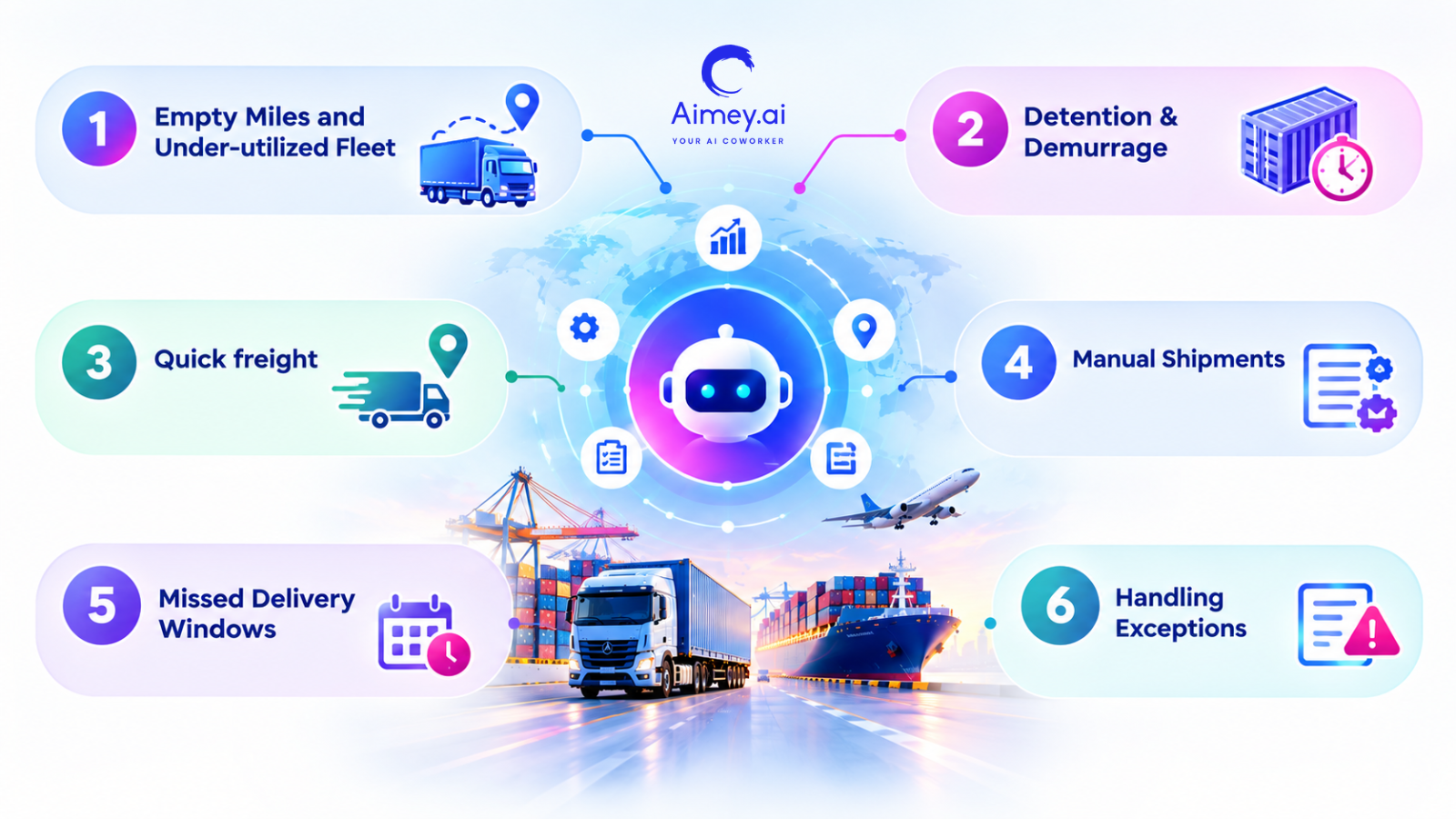
Logistics teams might start by defining cost centers where data is already available, and the workflow is based on clear operational guidelines. Each use-case below can be mapped to a single agent workflow.
1. Empty Miles and Under-utilized Fleet
Connect TMS to fleet, load and dispatch data. Set restrictions on capacity, service windows, route limits, and acceptable repositioning costs. The AI agent can detect idle capacity and recommend a load or repositioning action.
2. Detention & Demurrage
Input feed appointment timings, arrival timestamps, dwell time and carrier contracts into workflow. The agent monitors dwell against established thresholds and alerts the operations team prior to detention charges being incurred.
3. Quick freight
Track orders to promised delivery dates and highlight shipments at risk of missing their window. The agent is able to assess valid transport choices, calculate the recovery cost and forward the decision to a manager when the cost is above a certain level.
4. Manual Shipments
Integrate the TMS with your ERP, WMS, CRM, email, and carrier systems. The agent may pull shipment information, update records, reconcile status changes, and send routine notifications without double data entry.
5. Missed Delivery Windows
Compare actual ETA data to customer delivery windows and SLA commitments. If the risk surpasses a set threshold, the agent can raise an alert to dispatch, draft an update to the client, and initiate the permitted recovery protocol.
6. Handling Exceptions
Configure the exceptions that matter – missed pickup, ETA deviation, SLA risk, rejected tender or stopped freight. The agent looks for these circumstances and forwards only those that need judgment or approval to managers.
What Does an Agentic AI Logistics Stack Look Like?
Agentic AI is integrated with the systems a logistics company already has in place. It doesn’t replace them. Rather it collects operational data from different platforms, interprets the context and uses that knowledge to run permitted workflows.
It can connect with the following systems:
TMS: shipment status, routes, loads, carrier activity, delivery schedules.
WMS: Inventory levels, warehouse capacity, picking status, and fulfillment activity.
ERP: Orders, Invoices, Purchasing, Financial information, Supplier details.
Fleet and Telematics: Location of vehicles, vehicle utilization, driver data, fuel consumption and conditions of routes.
CRM: Account activity, escalations, customer history, SLAs.
Carrier Portals: Rate and capacity commitments and tender answers.
Email and Collaboration Tools: Customer communication, corporate debates, approvals and operational choices.
When a certain workflow calls for it, the agent assembles the appropriate information from various systems.
For example, if the TMS indicates that a shipment will be late, the agent can verify the telematics data and the customer’s SLA, analyze recovery alternatives, adjust the workflow, prepare a customer notification, and contact the operations manager if approval is needed.
This provides logistics providers with a practical approach to integrate AI-powered automation around the systems they now rely on, rather than forcing their teams to relocate every process to a new platform.
What Should Logistics Providers Automate First?
The best candidates are processes that consume operating hours, have frequent exceptions, and have a clear business aim. The main sources for the logistics providers are:
1. Shipping Exceptions
Late deliveries, missed pickups, rejected tenders, ETA breaches, and SLA concerns require constant manual intervention. These techniques expose AI agents to a clear stimulus and a visible outcome.
2. Carrier Coordination
Typically, tender answers, carrier availability, rate checks, pickup confirmations, and carrier follow-ups need several manual contacts. AI is able to orchestrate these actions across the carrier workflow.
3. Fleet & Dispatch Operation
Dispatchers handle vehicle availability, changes to routes, delivery windows, and capacity restrictions during the day. These rulings make a strong case for intelligent transportation management.
4. Customer News
Ongoing emails and telephone calls from consumers about late shipments and adjustments in deliveries. AI is able to take care of the boring status messages and then route the sophisticated ones to the right person.
5. Formal documentation
The documentation – bills of lading, proof of delivery, invoices, customs paperwork and shipment records – produces a mound of admin work. AI is able to extract information, find missing data, and point out exceptions.
6. Operational Reporting
Shipping reports, carrier performance reports, SLA reports, and management reports sometimes require data from several systems on a daily basis. AI is able to provide that knowledge in decision-ready reports.
The best prospects have three characteristics: huge volume, repeatable decisions, and measurable operating cost.
What Does It Take to Deploy Agentic AI in Logistics?
Agentic AI is more than just an AI model. The proper operational data, system access, controls, and human supervision are needed before any agent can take action.
1. Reliable Operational Data
To make effective judgments, the agent needs to have precise data about cargo, customer, carrier, inventory, SLA, and fleet. Poor data quality can damage any workflow that relies on it.
2. Integrated Logistics Systems
To do a logistics job, agentic AI needs access to the systems where the work is done: TMS, WMS, ERP, CRM, fleet platforms, carrier portals, email and collaboration tools.
3. Clean Command
Each workflow needs clear boundaries. Teams need to understand which actions an agent can do on its own and which actions need approval from a human.
4. Escalation Human
Agents require a clear path for those exceptions they can’t resolve. High cost, high risk, or uncommon cases should be sent to the relevant operations or management team.
5. Audit Trail
Every automated decision needs to have a record of data, action, and outcome. This is important for operational evaluation, customer complaints, compliance, and accountability.
6. Quantifiable ROI
A business requires a baseline to be able to start automating. Some useful metrics are: manual touches per shipment, exception resolution time, SLA breaches, detention charges, empty miles, and hours spent on coordination.
The goal is a governed operating model that has the AI agent doing a specified job, with people maintaining decision-making power for decisions involving financial, customer, or operational risk.
Ready to Automate Your Logistics Workflows?
Agentic AI is able to manage shipment exception management, carrier coordination, customer notifications, and operational follow-up. Start with high volume workflows with well-defined rules and measurable costs.
Aimey provides AI meeting intelligence and workflow automation for the tools teams already use to connect conversations to execution. It translates meeting decisions into tasks, follow-ups, and collaborative activities.
Find out where Aimey can eliminate manual coordination between meetings, follow-ups, and operational workflows. See Aimey pricing and the tasks your team can automate.
Frequently Asked Questions
1. What does agentic AI mean in logistics?
Agentic AI is able to comprehend live operational context, decide the next step within the set rules, and perform a multi-step workflow. For a logistics company, this could involve moving a delayed shipment from exception detection to carrier coordination, system updates, customer communication, and escalation.
2. What ways is agentic AI influencing logistical operations?
The main change is to exception handling. Rather than require an operator to investigate each late shipment, an AI agent may review the ETA, SLA, carrier status and delivery constraints, initiate an approved recovery pathway and escalate only those situations that require human judgment.
3. What logistics jobs might AI agents do for you?
Some powerful use cases are shipment exception, tender management, ETA monitoring, dispatch coordination, carrier follow-ups, delivery updates, paperwork checks, and operational reporting. These processes function best when there are a high volume of transactions and explicit rules for decision making.
4. How does agentic AI bring down the expenses of logistics?
AI is able to step in before an operational problem turns into a cost event. For example, an agent can indicate a shipment approaching a SLA breach, analyze the possible recovery options and route the decision before incurring detention, expedited freight, redelivery, or service penalty expenses by the supplier.
5. Which logistical operations will agentic AI early adopters be?
Begin with high volume, frequent manual touch, many system handoffs and demonstrable cost workflows. Strong pilots are often shipment exceptions and carrier coordination as teams may assess resolution time, manual touches, SLA performance and cost impact.
6. Can an AI agent make logistics decisions without human intervention?
It can make predetermined decisions within limits it has been sanctioned. The supplier may extend an agent the ability to automatically send an ETA update or escalate an SLA risk but may require manager approval for costly carrier changes, expedited freight or client commitments.