AI Safety Best Practices for Managers in the Workplace
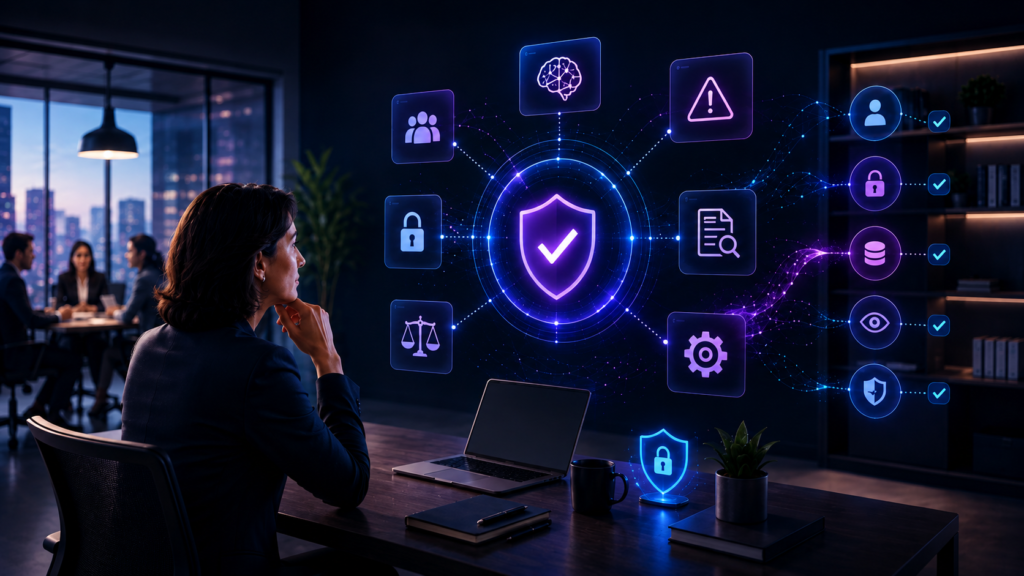
AI can help managers reduce repetitive work, organize information, prepare for meetings, and keep teams moving. But using AI effectively at work is not just about knowing the right prompts or tools. Managers also need to understand how to use AI safely, what information should and shouldn’t be shared, and where human judgment remains essential. In Part 1 of this guide, How to Use AI at Work (Manager Guide): 14 Prompts + Safety Tips, we covered practical ways managers can use AI to handle everyday tasks, from summarizing meetings and preparing stakeholder updates to creating project plans and identifying risks. Now, in Part 2, we’ll focus on the other side of AI adoption: using AI responsibly and safely at work. We’ll cover practical AI safety tips for managers, where AI meeting assistants and transcription tools fit into workplace workflows, and how managers can evaluate AI tools for their teams. The goal isn’t to avoid AI – it’s to use it with the right guardrails, oversight, and understanding. AI Safety Tips for Managers There are a few ground principles that are worth keeping in mind. 1. Don’t Share Confidential Information Customer data, personnel files, financial information, and confidential corporate discussions should not be put into public AI tools. varying platforms have varying rules around data, so it’s important to understand what protections are in place before you share anything important. 2. Check Facts Before You Use Them Sometimes AI makes errors, and it doesn’t always make its mistakes obvious. Before you include figures, dates, sources and calculations into a report or presentation, take a minute to check them. 3. Provide Clear Direction to Teams People need to understand where AI can help, and when human assessment is needed. A few simple principles can go a long way to keeping everyone on the same page. 4. Remember That AI Doesn’t Replace Judgment AI can help with research, planning and analysis, but the subsequent decisions are still for people to make. Hiring, performance reviews, compensation, legal, and customer promises require human judgment. 5. Tools Built for Business Business-grade AI platforms generally have more rigorous controls over privacy and access. Managers need to understand the underlying principles of how their company’s AI systems store and process information. 6. Look for Bias and Missing Context AI is built on patterns. It doesn’t have experience or background, and occasionally it misses the nuances that people get. The product is not to be taken at face value but rather something to be reviewed and discussed. Artificial intelligence can be useful if used responsibly. But problems can occur if teams blindly rely on it. At the end of the day good habits and clear expectations make all the difference. Common AI Mistakes Managers Should Avoid in the Workplace Many teams fail at AI because they expect too much of it or use it without clear guardrails. Here are some manager blunders to avoid. 1. Expecting AI to Substitute Expertise AI can summarize, organize, and recommend. It can’t replace experience, context, or accountability. Managers still have to make decisions and own the outcomes. 2. Using Vague Prompts Prompts like “summarize this” or “help me with this project” usually result in substandard outcomes. AI works better if it knows who it is talking to and what it is trying to do, and what form it is supposed to take. 3. Accepting Every Answer AI can confidently make inaccurate statements. Please treat the outputs as suggestions and recommendations and not facts. 4. Too Many AI Workflows Being Built Teams sometimes pick several tools without a clear reason. This adds more complexity, not less. Begin with a handful of high-value workflows and build from there. 5. Governance and Security Ignored Productivity, not privacy, should be a concern. Managers need to know what information may be shared with AI tools and what information cannot. 6. Success Through Use The point isn’t to use AI as much as you can. The idea is to eliminate friction, improve execution, and free up time for tasks that require human judgment. The teams that receive the most benefit from AI focus on outcomes, not novelty. Where AI Meeting Assistants and AI Transcription Fit In Notes get left behind, essential action items are missed, and teams waste time trying to piece together conversations after the fact. This is where AI Meeting Assistants and AI Transcription come in. 1. Minutes of Meeting AI meeting assistants can record the conversation and produce clear summaries that are easy to publish. If a team member misses a meeting, they don’t need to watch the entire tape to catch up. 2. Action Items & Follow-Ups Commitments are often made at the end of meetings, but the obligations may become vague. AI brings tasks to the surface, assigns owners and makes the next actions evident long after the conversation has ended. 3. Searchable Records AI transcription provides a reliable record of every conversation. Teams can revisit decisions, look up specifics, and discover information without needing to remember. 4. Sharing Knowledge There’s a lot of good contexts in meetings. Summaries and transcripts make such knowledge available to others who weren’t in the room and help keep it over time. 5. Cross-team Alignment Sales, operations, engineering, and customer success teams typically use the same information. Shared meeting minutes provide a single source of truth for everyone, not notes and updates dispersed across several systems. Meeting assistants doesn’t replace talks. They enable teams to collect, share, and act more effectively. For managers, that means more time on the admin job and fewer details sliding through a void. How Aimey.ai Helps Managers Use AI at Work Managers don’t need another management tool. They have less noise to distract them from important work. Aimey.ai works with your team to capture conversations, track next steps, and help everyone stay aligned, without extra work. 1. Record All Important Conversations Aimey also joins scheduled meetings automatically and transcribes the discussions in real time so managers can focus on what’s being